I have lymphoma. I am creating this narrative blog to provide an updated chronology of the events of the disease, as well as a chronicle of how my feelings about it are evolving and congealing into a meaningful form. It is early on in my awareness, which is a good time to start: it is 3:00 pm on Thursday, August 18, 2022, and I’ve just received the radiologist’s report of a PET-scan I had this morning.
I begin, therefore, with my initial awareness of the disease and, in installments which follow, will offer personal insights and private thoughts. It is about confronting death, not speculating upon it; and about re-assembling life, not the nostalgia of remembering it.
Because the subject is intense, each installment will be short. Asking the reader—and even the writer—to remain soberly focused on the matter more than briefly is unfair. And not productive.
“Life is pleasant,” wrote Isaac Asimov, “and death is peaceful. It’s the transition that’s troublesome.” This will be about transitions.
First Installment: living while dying
On Monday morning, the first of August of this year, I underwent a CT scan and ultrasound to investigate a suspicious nodule in my left groin that, initially, both the surgeon and I had suspected was a hernia. Some years earlier, he had repaired a hernia on the right side that had a similar appearance. On this one, however, he had noted some unusual tissue swelling that was uncommon in a hernia.
The afternoon of the scan I received a message from him to contact my internist. Before I had the chance, she phoned me. She had already read the radiologist’s report—which I, too, had read, as it was posted on my interactive web portal, MyChart.
“This is not a hernia,” she told me. As she spoke, I had on the screen before me the findings: Extensive lymphadenopathy through the abdomen and pelvis in combination with a markedly enlarged spleen raises the question of underlying lymphoma.
The narrative I had earlier constructed, explaining the years of over-stressing my core muscles, daily, on my gym’s ab equipment (certainly sufficient to cause a hernia), explaining my recent fatigue in moving to a new residence in 100+ degree heat, attributing my recent twelve-pound weight loss on excessive body stress, all of this sounded progressively weak even as I related it “This is not a hernia,” she repeated, softly. “Do you want me to tell you what you would like to hear? Or do you want to hear my opinion?” she asked, the note of patience in her voice fading.
“Of course, I rely on your opinion,” I protested meekly. “I only appear to know what I’m talking about.” It was a nervous laugh. I was bracing myself.
“You have lymphoma,” she said.
I found my reaction to be surprisingly stoic—not indifferent, but as if I were someone outside myself listening passively. Questions raced through my mind: lymphoma is a medical term not unlike schizophrenia: it conceals a wide range of demons, some less threatening than others.
An office visit with my internist’s associate on the afternoon of Aug 4 was upbeat. She indicated that the majority of lymphomas are the large B-cell subtype (80% or so) and are easily treatable—implying that, chances are, it’s what I have. She ordered a CBC with differential, to measure red blood cells.
It’s Friday, August 26, and yesterday morning I completed the last hurdle before beginning chemo: an echocardiogram to measure the strength of my heart in accepting the rigors of the coming cycles. At 4:00 pm I was in touch with a nurse on the oncology team: the EKG shows that my heart is adequate, and they are trying to schedule the first chemo cycle for next week.
The problem is the six-to-seven hour first session. Hard to schedule. All the others will be 1 to 1-1/2 hours. They’re trying.
Waiting is the hard part, of course: because unwelcome visitors to the body tend not to. They surge ahead, unconcerned.
But then, it is the height of arrogance to think that we are proprietors of this shelter. We share it daily with billions of other residents—viruses, bacteria, parasites, tiny six-legged creatures on our skin, in our scalp, hiding deep in the bowels of our bowels—perhaps most of them doing some good, or at least no harm.
I do not begrudge them their small space; I just ask them not to take up too much of mine, or to overstay. We have lived with these tenants—our species has—from our origins. Their histories are, in fact, much longer than our brief visit here. It must surprise the less generous of them when one of us, myself even, succumbs to their gluttony. They cannot survive without us.
I really must not focus on such things!
I think of dear old Vladimir Nabokov, (Transparent Things, 1972): “When we concentrate on a material object, whatever its situation, the very act of attention may lead to our involuntarily sinking into the history of that object. Novices must learn to skim over matter if they want matter to stay at the exact level of the moment. Transparent things through which the past shines!”
And he continues: “A thin veneer of immediate reality is spread over natural and artificial matter, and whoever wishes to remain in the now, with the now, on the now, should please not break its tension film. Otherwise, the inexperienced miracle-worker will find himself no longer walking on water but descending upright among staring fish.”
This is 15 Jan, and we have seen you in person and recently had a meal with you. You look…
What a period of your life. It is not easy, but your experience has given positive vibes to us all.…
You seem to be meeting this challenge with a sword in your right hand and a small shield in your…
We are glad, from reading # 14, that you had a good session, & could do it in Dallas! GO…
Hi Ron, We’re glad your itch & rash are gone. So sorry that was your plight. We are praying for…
Thank you. Also look for whatever crazy humor you can find in your life. Awakening to see the smiles on…
Some medieval pieces, a few Gregorian chants, and a nocturn or two, plus Chopin.
Dark moods pass as you have expressed. So good to hear that you Can sleep as that really does help.…
Thank you Ron for being so articulate about your disease. My cousin (as an only child he was like a…
The ups & downs of diagnosis are stressful. You feel a bit like you are in limbo until the diagnosis…
I cannot even daydream about 9 brains. As humans age I’ve watched family lose control of one brain. How many…
We came home from tripping on9/18 & Linda promptly got Covid! Ron, I’m using my quaranteen time to proceed on…
We’re glad you have the best medical care and we pray for your fortitude during this very challenging time. L/G
Anonymous is Jim Cress, I also learned today that I have to fill out all of the originator info to…
I make it a habit to learn something NEW everyday. Your research and explanations are enlightening, but scary when you…
Friend Ron, The writer in you finds an outlet which enhances us all, bringing us closer to you as we…
We are traveling and have finally gotten caught up on your blogs. Your description is most eye opening. Praying that…
Just read your latest blog# 4. Continuing to 🙏. Linda & Gilbet
As with all labyrinths, people who love them love the experience and enjoyment of the process itself. Your maze has…
Sending you hugs & energy to repel the body snatchers!! Love reading your writing. ❤️
Re: Fifth Installment. My initial reaction was to buy you a great set of water wings, but it is your…
“it is a very conscious me witnessing a decidedly physical me, and one of us isn’t entirely well. It’s sending…
Ron – I am so glad you are doing this blog. Please know my thoughts are with you. and I…
Ron, Thanks a bunch for sharing with those of us who are privileged to be your friends. Of course you…
Sixth Installment: Odyssey
It’s Wednesday, the last day of August and the day before the first day of the first cycle of chemo. It’s terribly busy, from 8:00 am to 1:30 pm, with diverse activities in three locations.
At 8:30, I meet face-to-face with my long-time internist, Dr. Stephanie Brinker, at Presbyterian Office Building 2 on the West Campus. While I had been in communication by message and phone, it was good for us to see each other for the first time in three years! The isolation imposed by the pandemic had been largely responsible.
The previous late afternoon, I had noticed lower-body edema (fluid accumulation in feet, ankles, calves, knees). I had attributed the swelling to a new grout-prevention drug, allopurinol, which can sometimes cause this. The steroid prednisone does as well, but I had completed that regimen two days earlier.
This was not a cause for alarm, I reasoned, but I had not taken the allopurinol that morning (but brought the med with me just in case.)
Brinker wrote in my MedChart, I do not think this is related to your allopurinol. I think it most likely from the tumors compressing your lymphatic drainage and venous return +/- the effect of prednisone. She recommended compression knee-socks and elevating my legs when possible. Good luck with the chemotherapy! It was good to see her again!
Next, across campus, I had the routine-before-chemo blood draw. And then a meeting with Thao Doan, the oncology PA to review the entire treatment plan, including both scheduled medication and the chemo sequence. She echoed Brinker’s edema diagnosis and treatment.
Finally, back across campus to Pulmonary Function Services to prepare my lungs with the anti-microbial Pentamidine, to prevent pneumonia in the immune depression caused by chemo. The solution is converted to a mist in a nebulizer. I inhaled the oxygen-induced mist for 25 minutes. I’ll be doing this before each cycle!
Reflection: discovering my body
I am pretty attuned to the workings of my insides. I thought I knew myself pretty well. I monitor my pulse rate internally. I use the breathing techniques of mindfulness to regulate and release endorphins. From my teenage years, I could control headaches through biofeedback.
This self-assurance, at four-score six, was being shaken up by this invasion of the body-snatchers and the sudden confrontation of a stranger within. Was I losing control as they seized this power? Was my mental discipline flagging with age? Or did I never know myself that well, after all? A humiliating thought!
Is the soul within us a stranger in its own household? Virginia Woolf felt the angst of living captive within: “We are shackled…as bodies to wild horses.” This disheartening notion—at least for me, at this age and in this condition—fetched both the angst of uncertainty and the exhilaration of further discovery yet to come.
We live in ambiguous times.
24 responses to “Living while dying”
Jim Cress
This is 15 Jan, and we have seen you in person and recently had a meal with you. You look good (for an old guy) but most important your mind and outlook are back to before this latest assault on your body. All of us need to get the most out of every single day, but you have just gone through an amazing spotlight for each and every day. Thank you for sharing your trauma and for making it real for each of us. May we all grow through your sharing.
What a period of your life. It is not easy, but your experience has given positive vibes to us all. Thank you for your strength in sharing. Most people would not have shared like you have.
You have so much to be THANKFUL for, particularly your medical team and the products they have offered you.
You seem to be meeting this challenge with a sword in your right hand and a small shield in your left.
I think you and I have similar feelings about prayer. I’m not sure whom to address it, I think it’s horizontal benefits are immeasurable. It helps bond with friends who pray for me which I will for you. I wish you luck, whatever that is.
Ken Rogers
We are glad, from reading # 14, that you had a good session, & could do it in Dallas! GO RON onto Victory!
Part of your big rooting squad,
Linda & Gilbert
Hi Ron,
We’re glad your itch & rash are gone. So sorry that was your plight.
We are praying for the doctor’s knowledge on what caused the rash and successful treatments to come.
Linda & Gilbert
Thank you. Also look for whatever crazy humor you can find in your life. Awakening to see the smiles on your daughters faces is what to hang onto.
Also enjoy that a PVNr made a comment about that strange standing thing on your Hawthorne porch. After we chatted about Halloween and it’s relationship to your profession, he finally ‘got it’ and laughed.
Dark moods pass as you have expressed. So good to hear that you
Can sleep as that really does help.
Are you listening to music? Just wondering…,if so what?
Thank you Ron for being so articulate about your disease. My cousin (as an only child he was like a brother) had
Lymphoma. I like to know as much as I can. He was our opposite mentally. So thank you again for your blog.
I cannot even daydream about 9 brains. As humans age I’ve watched family lose control of one brain. How many things could possibly go wrong with nine?
Maybe you are teaching us too much about anatomy. Too much to think/worry about. Give us some more of your emotions. You are a bright guy, but I can’t GOOGLE how you are feeling. You have secrets that I am willing to learn.
We came home from tripping on9/18 & Linda promptly got Covid! Ron, I’m using my quaranteen time to proceed on my memoirs. You are being productive during your treatments in an amazing way of comprehending what is happening. We are bowled over!
Praying for you,
L & G
I make it a habit to learn something NEW everyday. Your research and explanations are enlightening, but scary when you tell it to this nearly 80 year old. We are following your journey closely. Thank you.
Friend Ron,
The writer in you finds an outlet which enhances us all, bringing us closer to you as we walk with you in this journey.
You continue to be in our prayers.
🙏, Linda & Gilbert
As with all labyrinths, people who love them love the experience and enjoyment of the process itself. Your maze has been developed just for you by true experts, and it seems you are appreciating and enjoying the process. Thank you for sharing.
We are traveling and have finally gotten caught up on your blogs. Your description is most eye opening. Praying that you will overcome the foreign invaders.
Gilbert/Linda
Re: Fifth Installment. My initial reaction was to buy you a great set of water wings, but it is your observation of your situation that is much more important/critical than being able to walk the miracle. Jim
“it is a very conscious me witnessing a decidedly physical me, and one of us isn’t entirely well. It’s sending me messages that are alarm bells: your packaging is wearing down, spending out, running poorly.” Well said, amigo
The waiting is over. At 8:15 this morning (Thur., Sept. 1, 2022) Daughter Janna and I arrived at the 4-day-old Infusion Clinic at Red Bird Mall. Built to meet the growing chemotherapy needs of the populations of South Oak Cliff, Lancaster, Waxahatchee, and others, it was the only center in our metroplex with an available 7-hour time slot this week (it only took 5-1/2 hours, however). The twelve pristine infusion rooms open with translucent doors across from the nurses’ station, behind which are restrooms and a coffee/juice bar. Nice! I was the third patient to be seated in the comfortable Infusion Chair, fully adjustable to horizontal.
A tv, heated blankets, and ever-present TLC from oncology nurses Lauren (new-arrived from Corpus for her new position) and Retta really made us feel comfortable. Physician’s Assistant Edie Brocket gave me detailed information on what meds they were about to give me, in what order, and what I could expect. Retta began the IV, Janna left for Dallas, and I settled back with a novel, logbook, and a warm blanket. It was 9:20.
Injected with the antibody Ritaximab, accompanied by Tylenol and Benadryl. I got only to the second page of the novel when my eyelids settled and I reclined the chair. I slept. Off and on. For over two hours. Waited for internal alarm bells, but my systems were happy—as was I.
The antibody admin would last until 11:00, interrupted every 30 minutes by a soft beeping in the machine, waking me briefly, as Lauren came in and increased the dosage a notch.
At noon Retta retrieved my Organ Transplant lunch bag from the fridge and I ate half the sandwich In had brought and a drink. At 12:15 Brittany DeLaurentis, the oncology dietitian, visited and went over all the recommended foods to eat and not eat during my chemo cycles.
At 11:15, the machine gently informed us that the last of the Ritaximab was entering my body. It was time for the much shorter chemotherapy drugs to take over. Lauren began these at 1:15 and suggested that I call Janna: it would all be over in fifteen minutes.
As an added surprise, Retta left the IV needle in, removing the drug administration tube, and secured it to my arm to await Day 2: “so we don’t have to poke you again!”
We were back at the Village by 2:15. The dining room was empty (although I’m told that my immune system would not be seriously compromised for another two days—the weekend).
Day one couldn’t have gone more smoothly. Tomorrow should be even better: only there for the chemo; less than an hour, possibly. The clouds are bright and fluffy—not dark and gloomy!
Home improvement
I can remember when the vast majority of us lived through our adult years in the house we grew up in. During those years, it had received roof replacement, window upgrades, several coats of paint, and perhaps old asbestos siding exchanged for a brick façade. We replaced water heaters, aluminum wiring gave way to copper, corroded plumbing was removed, and new floors installed.
The first organ transplant was in 1964, but body repair is much older: skin grafting occurred in dynastic Egypt almost 4,000 years ago. Cosmetic redecoration became part of renovation with liposuction in the late 1970s, and Botox body enhancement arrived only recently, in 2002.
Our bodies age just like our houses, often gracefully and requiring no major repair. Still, biological home improvement enhances health and increases longevity. There are parts—like houses—that can’t be fixed, repaired or replaced: like arthritis in our joints and curvatures in our spines (which are debilitating but seldom fatal). Others, like many cancers, are life-ending.
Unlike houses, biological homes come with inevitable death in small steps or large, drawn-out or sudden. Replacements, transplants, repairs, and ameliorations are all temporary. Eternal life—the ceaseless quest of philosophers and alchemists in ancient times and of innovative science in today’s cryogenic research—remains elusive.
A prudent attitude for those of us closer to that inevitability—certainly for me—is not to view that coming as an ending (nor, necessarily, even as a beginning), but as one event at the end of so many; and with a laid-back fatalism. I call it the Emily Dickinson sobriety:
Because I could not stop for Death/He kindly stopped for me
24 responses to “Living while dying”
Jim Cress
This is 15 Jan, and we have seen you in person and recently had a meal with you. You look good (for an old guy) but most important your mind and outlook are back to before this latest assault on your body. All of us need to get the most out of every single day, but you have just gone through an amazing spotlight for each and every day. Thank you for sharing your trauma and for making it real for each of us. May we all grow through your sharing.
What a period of your life. It is not easy, but your experience has given positive vibes to us all. Thank you for your strength in sharing. Most people would not have shared like you have.
You have so much to be THANKFUL for, particularly your medical team and the products they have offered you.
You seem to be meeting this challenge with a sword in your right hand and a small shield in your left.
I think you and I have similar feelings about prayer. I’m not sure whom to address it, I think it’s horizontal benefits are immeasurable. It helps bond with friends who pray for me which I will for you. I wish you luck, whatever that is.
Ken Rogers
We are glad, from reading # 14, that you had a good session, & could do it in Dallas! GO RON onto Victory!
Part of your big rooting squad,
Linda & Gilbert
Hi Ron,
We’re glad your itch & rash are gone. So sorry that was your plight.
We are praying for the doctor’s knowledge on what caused the rash and successful treatments to come.
Linda & Gilbert
Thank you. Also look for whatever crazy humor you can find in your life. Awakening to see the smiles on your daughters faces is what to hang onto.
Also enjoy that a PVNr made a comment about that strange standing thing on your Hawthorne porch. After we chatted about Halloween and it’s relationship to your profession, he finally ‘got it’ and laughed.
Dark moods pass as you have expressed. So good to hear that you
Can sleep as that really does help.
Are you listening to music? Just wondering…,if so what?
Thank you Ron for being so articulate about your disease. My cousin (as an only child he was like a brother) had
Lymphoma. I like to know as much as I can. He was our opposite mentally. So thank you again for your blog.
I cannot even daydream about 9 brains. As humans age I’ve watched family lose control of one brain. How many things could possibly go wrong with nine?
Maybe you are teaching us too much about anatomy. Too much to think/worry about. Give us some more of your emotions. You are a bright guy, but I can’t GOOGLE how you are feeling. You have secrets that I am willing to learn.
We came home from tripping on9/18 & Linda promptly got Covid! Ron, I’m using my quaranteen time to proceed on my memoirs. You are being productive during your treatments in an amazing way of comprehending what is happening. We are bowled over!
Praying for you,
L & G
I make it a habit to learn something NEW everyday. Your research and explanations are enlightening, but scary when you tell it to this nearly 80 year old. We are following your journey closely. Thank you.
Friend Ron,
The writer in you finds an outlet which enhances us all, bringing us closer to you as we walk with you in this journey.
You continue to be in our prayers.
🙏, Linda & Gilbert
As with all labyrinths, people who love them love the experience and enjoyment of the process itself. Your maze has been developed just for you by true experts, and it seems you are appreciating and enjoying the process. Thank you for sharing.
We are traveling and have finally gotten caught up on your blogs. Your description is most eye opening. Praying that you will overcome the foreign invaders.
Gilbert/Linda
Re: Fifth Installment. My initial reaction was to buy you a great set of water wings, but it is your observation of your situation that is much more important/critical than being able to walk the miracle. Jim
“it is a very conscious me witnessing a decidedly physical me, and one of us isn’t entirely well. It’s sending me messages that are alarm bells: your packaging is wearing down, spending out, running poorly.” Well said, amigo
I arose early, at 6:45, even though my second and last infusion of the first 28-day chemo cycle was not until 1:45 pm. In an effort that was more attitude than aim, I did 200 reps on my upper body exerciser—before coffee, juice, and cereal. With the wave crest from yesterday’s chemo session still lifting me, and the anticipation of the one today, I wanted to make the statement that life as usual will continue in the face of the unusual!
It was cool and rainy most of the day. The session began at 1:30 with a preparatory saline injection, followed by the steroid dextramethasone (to help prevent inflammation and any allergic reactions). Thirty minutes later (2:25), the chemo began. It was over at 3:00.
And that was that. I had successfully, and with no adverse reactions, completed the infusion of the first cycle! Little victories in a long battle.
In the process, Retta fitted me with a Neublasta subcutaneous injector—on the abdomen—which, at 5:30 the following afternoon (9/3), would begin a 45-minute injection designed to boost my antibody production and thus help recover from cell loss.
On the way home, we stopped at my pharmacy to get Claritin-D. A tab each evening for three days will block histamine production and thus reduce any bone pain resulting from the Neublasta injection.
Reflection: biological and spiritual realities in healing
Treating cancer, I have quickly discovered, involves serpentine paths using medicines to treat other medicines to help prevent the cure from doing harm as it does good. It involves engaging through back doors and lateral entrances in seeking ways to sidestep some reactions while encouraging others.
The Minoan Labyrinth comes to mind: the path through it was as spiritual as pragmatic, for in its confused twists and turns, dead-ends, and doubling-back, it removed the practical soul from linear time. It introduced, in its place, an uncommon path to an unexpected destiny.
The ancient Greek tale of Theseus and the Minotaur of the Labyrinth is every bit as convoluted and embedded with unexpected results as was the labyrinth itself. I challenge my friends to read it. Aloud.
The minotaur, like cancer, devoured humans who encountered it, until a few souls discovered its vulnerability. I’m hoping to be among them.
Ninth Installment: the genetics behind my cancer
The biopsy performed on my lymph node on August 22 generated a multitude of tests, among them genetic screening. The clinical report revealed two gene anomalies commonly associated with lymphoma—particularly my sub-class.
The firstabnormality involved a translocation between chromosomes 11 and 14—a random error in the normal replication of cells in which the two chromosomes exchange portions of their “arms” during cell division. Such “crossing over” between chromosomal segments occurs rather regularly in mitosis, is limited to a tiny portion of replications, and the errors are flushed out of our genomes in short order.
This rearrangement, technically represented as t(11;14), is observed in 50-70% of mantle cell lymphoma patients. In the 200 cells screened in my biopsy, t(11;14) was found inevery one of them. Instead of being purged, it proliferated. There is evidence that this cloning error is a contributory cause of the cancer.
The translocation itself apparently causes a malfunction in the genetic control of cell growth. The result is uncontrolled growth. It’s a big mess!
The second abnormality involves a specific mutation in another gene that resides on still another chromosome. This is the so-called “P53 gene” located on chromosome 17. In its normal version, this gene holds the code for producing a protein that suppresses tumor growth.
But the accidental mutation changes a single amino acid (arginine) into a useless and non-functional entity. Tumor suppression is no longer regulated. Cellular chaos results.
This mutation, found during an assay on September 2nd, occurs in 10-20% of mantle cell cases. The combination of the translocation in chromosomes 11 and 14 and the mutation in chromosome 17 highlights the therapeutic challenge of trying to compensate for genetic mistakes. And it underscores my plight.
Molecular roulette
Bioethicist Paul Ramsay put this dilemma in a particularly interesting perspective. “Each of us is a package of normal abnormalities and abnormal normalities,” he says; “combinations of more or less weak genetic strengths and strong genetic weaknesses.” It seems miraculous that so many of us survive these assaults with such flaws!
And yet still another perspective resides within this human story: most of the diseases that plague our aging bodies and the infirmities that cut us down are age-related and late-occurring. Arthritic lesions mark our later years. Cancerous invasions frequently arrive only in our twilight. The shorter life spans of our ancestors took them away before these indispositions could strike.
We are the only species that survives far beyond our reproductive years. It was not meant for us to hang around so long, and we burden the enterprise of survival when we do. If this sounds crass, it is because the sentimentality we associate with age’s wisdom and the deep respect our cultures have assigned to elderhood crafts a veneer of virtue to disguise our handicaps.
There is no comfort in this view. To find it, we must press deeper into the self and accept that veneer with poise. Still, I catch myself listening for the distant sound of the watchman’s rattle… somewhere out there, warning.
Tenth Installment: bad day at the lab
On Thursday afternoon, one week after my initial chemo, I went in for an important blood draw. This would be the first opportunity to see if the chemo was having its desired effect.
It did not go well. On two tries, once in each arm, the tech tried and failed to draw blood. As she withdrew the needle, we noticed that not a drop emerged from the vein. She was aghast.
“You have no blood!” she exclaimed. Yet she had indeed found the vein. It wasn’t like she just missed.
Disbelieving, I wondered if, awaking that morning from a good sleep, someone had embalmed me in the night without permission! “I won’t try a third time,” she said, and she passed me off to Josh (not his real name) for another effort. He had drawn my blood before with ease. I was hopeful.
Josh tried twice, again in each arm, to no avail. I was confused and frustrated. “How much water have you had today?” he asked. I suddenly realized that my prescribed hydration schedule—68 ounces of liquid daily—had fallen far short. I hate drinking water! I had had maybe 24 ounces of liquid.
My body fluids course through my circulation. Without adequate hydration, a vein is likely to collapse when the needle is inserted. I left and rescheduled a draw for the next morning—Friday. At home, I began hydrating, and continued faithfully through the evening and the following morning. I had learned a lesson.
Did I mention that I hate drinking water?
Friday’s draw was successful.
Reflection: crystals and compromise
I had noticed from earlier contacts with Josh that he wore a crystal on a chain around his neck. Small, it was hardly noticeable. Probably calcite or quartz. This time I asked him about it: Was it worn as a simple piece of jewelry, or was there a deeper underlying purpose?
“It offers protection,” he answered matter-of-factly.
“Protection from disease?” I wanted to know.
He smiled. He is an enormously skilled technician, an intelligent young Black man, serious and conscientious in his work. We had gained an easy familiarity by this point, and I was not concerned that he would take my question as a challenge to his beliefs.
“Look,” he explained, “every day here is a day surrounded by danger.” He held up his gloved hand. “Only a thin layer of latex separates me from who knows what?” He shrugged. “Why not take advantage of the power of crystals?”
I nodded. He was clarifying, not defending. “Josh, do you see this as an alternative to medical protection, or maybe as a supplement?”
“Neither one,” he said. “I’m not really into alternative medicine or magic.” He paused a moment. “Do you know why skydivers wear a reserve chute? They expect never to need it. But knowing it’s there helps.”
I smiled at this unexpected wisdom. He had clearly thought this through. He fingered the crystal pendant. “Knowing this is here helps.”
Driving home, I thought about our conversation. In ancient times, we lived in an enchanted world, filled with gods and demons and home remedies and magic. It was not a pleasant world overall, but the enchantment gripped us and organized our lives in a blessedly communal manner.
When rational thought transformed the world with an empirically driven science during the Enlightenment, we suddenly occupied a material universe. We and our world became disenchanted.
We gained enormously in the aftermath: the germ theory and penicillin provided a sense of control we never had before. We are healthier. But we lost something, as well.
It might profit us to bring some of the magic back.
Eleventh Installment: Update
On Thursday afternoon, now at the end of the second week after my initial chemo, I had another blood draw. The results show what I feel, physically: my anemia is slowly lessening, so I have more energy.
The lymphocytes are still suppressed—both the good ones and bad ones—so the drugs are doing their job while I remain immune-challenged and at risk.
Reflection: the mutiny of my body
I’ve been wondering why, from the beginning of this disease, I have felt so estranged from my body. As I wrote in my second blog, I’ve been more concerned with losing touch with myself than I have with losing my hold on life. This is oddly disturbing. We should rail against this assault, my body and I together mustering all our weapons—and those the doctors provide—against a common enemy. But I haven’t felt that partnership.
It’s beginning to become clearer: my body has been seeking to dispossess me by slow self-destruction. It’s shoving me aside. This is unlike fighting a common cold or other infection from the outside. It is also unlike the rebellion against aging, from the inside, where we struggle to resist creeping immobility or stiffening joints. There, our bodies are in normal decline and we can mitigate the effects.
But I am not dealing with aging here; I’m dealing with a mutiny on my ship! In normal cases of disease, we catch it from outside and our bodies defend against it. This comes from within my cells and tissues, spontaneous and unannounced, and seeks to dominate. Un unsettling thought has crept over me: my body does not have the disease—itis the disease.
I’m diving into the depths here and it gets murky, so I’m hesitant. I find it safer to have such thoughts in brief segments and keep them in the shallows.
Twelfth Installment: End of first cycle
My second chemo cycle begins in just over a week now. Thursday’s blood draw was again troublesome, even though I was certain I had sufficiently hydrated to provide good fluidity. Alas, three attempts by two frustrated attendants left my arms sore and the vacutainer collection tubes empty.
I scheduled another stab at it the next morning at 9:00, filling myself with water that evening and the next morning. It was successful—only just—as the viscous fluid oozed, as reluctantly as molasses, into each tube. What normally takes less than thirty seconds took forty-five.
Impatient and determined to succeed with the second collection tube, the tech pulled the first one when barely a third filled (“It should be enough,” she said, hopefully). It was, and so was the second.
Confused by these recent experiences, I drove home, vowing to redouble my hydration efforts. Sixty-four ounces a day is recommended, but this is minimal. I’m caught in a recurring loop: chemo often leads to excessive urination as a side effect, which causes dehydration, while compensating for increased fluid intake itself increases urination, and so on.
Sixty percent of my body is water, and cancer treatment narrows the normally tolerant margins of acceptable variation. That’s a bummer! One of many!
Reflections on blood, and all that
I have been paying attention to my anemia as one cause of my fatigue, since low red cell count and the corresponding low hemoglobin lead to iron deficiency. But these have remained only marginally low since chemotherapy began—both hovering around 80% of normal.
Fortunately, such mild anemia does not interfere with the blood’s primary functions: transporting oxygen to the tissues and removing carbon dioxide (the role of hemoglobin), and carrying nutrients (the role of plasma).
So it fascinated me to learn that hemoglobin and its iron are not the only substances to do so: the animal world has alternatives. Among spiders, lobsters, and the octopus, copper does the trick. Instead of hemoglobin, it’s hemocyanin that binds oxygen for their tissues and carries CO2 away.
And it’s not blood cells that provide this transport—it’s the clear circulating blood itself (called hemolymph). Their copper-based blood turns blue when exposed to air—not the more respectable crimson of red-blooded creatures!
Thus, the blue-blooded octopus has yet another advanced feature in life’s evolution: copper is much more efficient in absorbing oxygen than is hemoglobin—an important advantage in oxygen-poor ocean depths.
The other advanced features? Two hearts and nine brains. Intelligent creatures, these are.
And we barely use our single brains!
Thirteenth Installment: A disappointing stumble
Although my last blog, the week before my second chemo round (scheduled for October 3-4) set a hopeful note, storm clouds were already gathering that early weekend. On Thursday I was aware of persistently itchy skin, which continued over the weekend, slowly worsening. By the following Thursday a mild rash accompanied it, with reddish blotches.
The itching was now interrupting my sleep, and no OTC itch medications helped. On Monday at 1:00, I had my routine meeting with the PA, Thao Doan, prior to the first day’s infusion at 1:30. She was quite concerned with the rash and itching, wanting to know everything I had taken, eaten, or shampooed with that might have been the cause.
I felt guilty for not having made her aware at the time it began. I explained that, since I had noted that these were two side effects that often accompany treatment, I did not feel it necessary to report them. She explained, too patiently, I thought, that any side effect needed to be reported because it could influence future treatment. I was mortified!
“Of course,” she continued, “we will now reschedule the chemo for next week,” pending diagnosis and effective treatment for these new symptoms. She put in a request for an immediate appointment with the center’s dermatologist. She also texted my pharmacy with a cream for the rash and pills for the itch.
My Austin daughter, Susanna, drove us back to PVN via the pharmacy. My Santa Fe daughter, Janda, and young (1 year – 8 months) Charlotte were waiting back at the apartment. They had both arrived on Saturday to take turns accompanying me during and after chemo. I was now fully in a guilt-and-depression mode. And suffering from a damnable itch!
I took the first of the two-a-day tablets; we applied the cream, and all took a silent lunch in the dining room. By Wednesday the rash was mostly gone, and the itching had subsided about 15%. My mood was still poor.
Thirteen is not a good number!
Reflection: recognizing mood
A good part of my daily self-inventory involves recognizing my current frame of mind. Pinpointing it among the many facets of mood is not easy because I’m always prepared to deny the unpleasant or less admirable elements.
The assemblage of emotions cascading over me as we drove home from the humbling encounter with Thao were all bad: anger at myself, disconsolate over the interruption, deeply distressed over continuous surprises in my condition, depressed over a feeling of one-step-forward, two-steps-back, royally pissed at the world.
Should I confront these feelings one at a time, or simply deny and sulk until the mood passes? There is always some fright in losing control, and a psychic danger in admitting it. I had already been forced to share my body with an imposing enemy, and to risk weakening my will by recognizing a fragile self might be too much.
So I was in a dark place. I lay on my bed after we had applied the cream, not able—nor particularly willing—to think straight, but wanting to be alone in my darkness. I took deep breaths, filling my lungs, holding, exhaling, pacing my rhythm, letting the endorphins wash over me, waiting for the dopamine rush.
My mind wandered back to the past, at a dental appointment. He was admonishing me to brush more frequently and thoroughly. “Look,” he explained, “you really don’t have to brush all your teeth—only the ones you want to keep.” What a strange way to put it, I had thought. But it became a powerful metaphor, and it stuck to me.
I didn’t need to recognize all of my dark thoughts—only the ones I was willing to deal with! I inventoried them, one at a time, trying to replace them. Anger was a weakness, disconsolation a temporary condition. I was depressed over a minor setback in progress—focusing on the ditches I had run into instead of the road between them.
I settled into a light sleep. When I awakened, my daughters were waiting, with smiles and encouragement and compassion.
Fourteenth Installment: The second chemo cycle begins
After suffering through a week that held a lot of downers, the second 28-day cycle began this Monday with a brighter destiny in sight: They gave me the green light to proceed with chemo the next day—the first of two infusions.
Both days went smoothly, thankfully at the Dallas clinic instead of the one at Redbird. I drove myself the second day, since Benadryl (which makes one groggy) was not part of the mix. They then affixed an auto-injector on my arm, set to release a stimulus for growing specific white blood cells (neutrophils) which fight infection. The second day cocktail always seriously reduces the immune response, making me more susceptible to the slightest infection.
In the afternoon I returned to another location for the inhalation of pentamidine, which coats my lungs with an anti-infective agent to prevent one of the nastier forms of pneumonia.
It was a long two days, but what a change in my mood-generator from doubt to confidence. I am now armed like a medieval knight, ready to engage in whatever assaults I’m challenged with. Too much hyperbole? Probably!
Reflection: quibbles and bits
It’s curious that my attention is drawn to trivia and incidental observations since my illness began—possibly because it’s the minor, and often unexpected, details of the condition that pop up here and there and cause concern.
I noticed, for instance, that the clock on the wall of my small infusion room had stopped recording time. It was stuck on 2:30 (am or pm?), and the sweeping second hand was pulsing slightly at the three-quarter mark, trying to squeeze enough battery juice to advance one more tick.
My imagination, seeking some symbolic message, suggested that time held back during this 3-hour interval in my life to allow me to prepare.
The following day my second infusion was in a different room, so I could not know whether time had resumed its march.
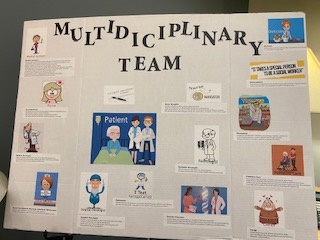
Then, I noticed a poster put up in the waiting room—created by some of the cancer management team—touting its multidisciplinary approach. There was pride here, and it made me feel like a part of it.
But I spotted the trivial misspelling of “multidisciplinary,” and resisted silently chastising the crafters: their special attention was medical, not lexical, after all!
Later in the afternoon, as I was inhaling the pentamidine through the nebulizer, my attention fixed on the container used to hold hazardous waste—specifically the “sharps” injector needles. I found the instructional message on the front oddly ambiguous: “REUSABLE SHARP’S CONTAINER”. Which was “reusable,” the needles or the container? Using the possessive did not help.
This is a trifling point, of course, as anyone with common sense would fully understand the danger of reusing pointy things like hypodermics! I even pointed this out to my attendant, who somehow saw no ambiguity: it’s the meaning that’s conveyed, not the grammar!
I’m being fussier than usual. It’s like time, symbolic in the wall clock, is out of joint, spinning
reality from its important messages to its trivialities. I suppose it should please me that my thoughts can converge on inconsequential banalities and blessedly ignore the surrounding chaos, “that ever was I born to make it right!”
Fifteenth Installment: A ray of sunlight
On the Monday before beginning my second cycle of chemo, when she pronounced me good-to-go for the infusion the following morning, I asked the nurse when I might expect to notice some outcome. In my initial consultation with the team members, back in A
ugust, Dr. Ramakrishnan had explained that patients—and the disease—respond differently to the same treatment. A reliable prediction at the onset of chemo was not possible.
“I realize I’m just beginning my second cycle,” I now told the nurse, “but in your experience, when should I see some results?” She didn’t hesitate in her reply. “It should be pretty quick after tomorrow’s first infusion.” This took me by surprise: I expected a more equivocal response.
I received the chemo on October 11-12. Five days later, I noticed a slight reduction in the size of the abdominal lymph node—the only affected area I could examine. But I was cautious: could this be more imaginary than real? Could the nurse’s hopeful remarks have induced my impression—a cause-effect pattern known in medical circles as iatrogenic?
I kept a watchful eye. On the seventh day—a full week after infusion—the reduction was even more pronounced. I estimated that the size of the node had diminished by over half! This was no flight of fancy!
It’s been seventeen days, now. I can no longer see or feel any enlargement. The invasion, at least at this site, has seemingly been repelled!
The PET-scan had revealed “multiple…lymph node conglomerates involving the bilaterally neck, both supraclavicular stations, bilateral mediastinal and abdominal stations and left inguinal station, consistent with infiltration….” It was everywhere, and I was well-nigh consumed!
All of these, in the scan image, were small, except for this inguinal one that is now all but gone. Does this mean that—except for the enlarged spleen—the disease is coming under control?
Only the next PET-scan, scheduled for November 30th, will disclose the magnitude of success. This occurs after my next (third) cycle.
In the meantime, I cannot help but be optimistic. But I will only celebrate after next month.
Reflection: keeping a perspective
I’ve learned a bit about perspective in my few months with this disease. One is that the “war on cancer” is a collection of minor battles, and those of us who are infiltrated with it can only focus on the battles. It is the role of the cure-seekers, who develop the weapons and run the clinical trials, to focus on the war.
The broader perspective is a worthy and heroic one. The narrow perspective of those of us in the daily battle merits neither adjective. I see my role as more pedestrian and my struggles are often halting.
The inspirational quotes about war and battles (for example, that we sometimes “must lose a battle to win the war”) ring rather hollow. Sometimes, the minor wounds suffered in my individual battle make the war itself far distant.
So it is by keeping the two perspectives in their proper places and insulated from each other, the battles from the war, that I can find some genuine comprehension. The small victories, like today’s, might indeed be part of a larger one. Or not.
So I cautiously celebrate this one!
Sixteenth Installment: The third cycle begins
My third 28-day chemo cycle began this week, inaugurating the new Simmons Cancer Center, around the corner from the old one, on Harry Hines. (My first cycle inaugurated the new center at Red Bird Mall.)
Monday’s preparatory blood draw was followed by a visit to PA Thao Doan, who read the results (all but two metabolic test results are always posted within a half-hour of the draw) and authorized the infusion. This was followed by the pemtamadine inhalation at the Pulmonary Center, administering the infection preventive (needed to compensate for the loss of immunity following infusion.)
The blood tests showed improvement in virtually every diagnostic: sodium is back to normal and the other metabolites are good; blood cell data, including lymphocyces, are improved to normal or near-normal values. It was a very happy beginning, all the better when Thao told me that, for my age, I was responding better than the average for this protocol, and that this was likely to be my last chemo infusion—cycle 4 should begin oral therapy at home! Let’s hope!
The infusions on Tuesday (4-1/2 hours) and Wednesday (1-1/2 hours) went well – although the injection needle, taped up and left overnight for the second day’s infusion, had slipped out and a new one was inserted. At 9:15 they once again fitted me with the subcutaneous on-body auto injector for Neulasta, which happened on schedule at 1:00 pm on Thursday during my Communications Committee meeting. This further stimulates white-cell count and enhances my immune response.
Reflection: I won’t be going back
“You must be so relieved,” a friend told me upon hearing about my progress. “Maybe it won’t be so long before you’re back to normal!” It was a genuine and warm sentiment, and I welcome this and similar well-wishes.
But there is no “normal”. And I could never go back even if there were. I do not mean this as a philosophical statement (even though Thomas Wolf, in You Can’t Go Home Again, was spot on!).
I mean, rather prosaically, that this is one of the more tenacious diseases and I am most certainly to be burdened with it for life—even in remission. Mantle Cell Lymphoma is notorious for revisiting the scene of the crime. It often comes back stronger. It will likely lurk long, hiding in some shadowy crevice, returning unannounced only to be beat back again. And again.
So, yes, I am relieved. I’m thrilled that I feel so much better. I am grateful for the pharmaceuticals that have brought me this far. But I won’t be going back.
Seventeenth Installment: Remission is on track
I had my scheduled PET scan following my third infusion on the last day of November. I got the results that evening. Translating the medical terminology (“interval resolution of previously noted,,,lymphadenopathy…suggesting complete metabolic response to treatment”) means all traces of cancer are gone. In effect, I have remission.
But the doctor (I see him next Thursday) must tell me this before I truly accept it—he may read something in the scan which I cannot, after all. But the measured sizes of all tumors and of the spleen are now back to normal dimensions. Only the right thyroid remains affected—which may not even require treatment.
At this point, I’m anxious to know what this scan means for an incurable lymphoma such as mine. Do I now switch to oral therapy? Is management now to become routine? How does this chemotherapy response influence my prognosis?
But, these questions aside, this is good news, and I will bask in it for the week.
Reflection: On rivers and such
It was Heraclitus who said you can’t step into the same river twice, because its waters are always new—and so are you. It’s been rather choppy for me of late, and apparently a smooth and placid stretch is coming. But even if, it’s probably not realistic to dwell on the thought too vigorously.
I love to kayak, and whitewater rafting on the Rio Grande is super fun, but there’s a rule of thumb: don’t paddle upstream. It’s best to let the water take you, and try to rudder around the hazards. If you go overboard (as one of my kids has done) or seriously bend a paddle (as a wife has done), you can mark the spot and avoid it when you make the run again—which is where the life-as-a-river metaphor breaks down. It’s a one-shot run downstream, leaving the hazards behind as new ones appear.
It’s a good thing that rivers can’t flow back up the mountain.
Eighteenth Installment: The new protocol
I realize much time has passed since blog #17, but nothing changed while waiting for the beginning of my “maintenance” phase of treatment. It began the day before yesterday—on Thursday, 12th of January—with a blood draw and visit with the P.A., Thao Doan. All blood counts are now back to normal (or on the edge of normal)—except, of course, lymphocytes, intentionally kept low, and my general physical condition was pronounced “excellent”.
So yesterday—Friday, 13th!—I began the “maintenance cycle” of treatment: two caps of Brukinsa. twice a day. This med completely blocks a specific protein (tyrosine kinase) from allowing cancer cells to grow and is specific to my form of lymphoma. I’ll be on this for a little over two months, with a PET scan on April 4 to re-evaluate.
Also, once a month (beginning yesterday) I will have an infusion of rituximab, which was part of my previous chemo. This is a monoclonal antibody which destroys the cancer sells when they appear. So the maintenance regime cuts both ways—preventing and destroying.
My body, of course, is the petri dish in which this struggle occurs.
Reflection: the petri dish
If you’ve followed this blog very long, you know my penchant for metaphor. The petri dish is effective: we can seed it with smears and study the reactions. In college, I watched an E. coli colony spread across the dish and stop abruptly where I had inoculated the agar with a reactant I was testing. Wham! The bacteria were wiped out!
I asked the nurse yesterday why, if the inhibitor I am taking daily and the annihilator I’m injected with monthly are so effective, the cancer always comes back, eventually. (Brukinsa, for example, “blocks 100% of BTK [the kinase] in blood cells and 94% to 100% of BTK in lymph nodes”!)
“We don’t know exactly what causes relapse.” She said. “Brukinsa doesn’t work forever. We need more studies” (i.e., we need more petri dishes like you!). Well, fine, so long as I’m around. I’m happy to be part of the experiment. But what I most want is to be rescued from these cycles; to be reunited with that entity I am now estranged from. So I’ll keep waiting.
Maybe if I can find a happier metaphor that allows reality to adapt to my imagination.
Nineteenth Installment: A better access
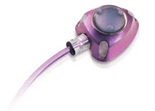
I just completed my second infusion in the “maintenance” phase of my treatment—daily medication at home and a monthly infusion at the clinic—with a new twist: three days prior to this week’s infusion (Feb 10), I had a mediport installed. This surgically implanted device provides easy, painless, and repeated access to a vein for both drawing blood and feeding fluids intravenously.
The nickel-sized port has a tiny reservoir with a self-sealing silicone bubble, placed just under the skin below the right collarbone. A slender plastic catheter attached to it is fed into a prominent vein leading directly to the heart. Puncturing the silicone with a needle is quick and painless.
There are significant advantages here: It avoids the discomfort of repeated needle stabs in the arm; it reduces the build-up of scar tissue, which makes vein access increasingly difficult; and it practically eliminates the risk of infection.
The device began as “the Hickman catheter”, invented by Dr. Robert O. Hickman, a pediatric nephrologist, in the mid-1970’s. It was called “a gift to the world”, as much a relief to doctors and nurses as to patients.
Three days after my surgery (a 45-minute procedure, absolutely painless) I had both a blood draw and infusion. Despite the still-tender incision, the process was quick and easy. I am much relieved!
Reflection: the spiral of change
From the moment of my diagnosis in mid-2022, I entered a somewhat surreal spiral of disease acknowledgement, each turn downward disputed by an unspoken denial deep in my psyche. Bending reality to the imaginary, I stepped backward up the spiral from time to time, rationalizing. Initially, I convinced myself that the tumorous lymph node was in fact a hernia; then, my fatigue was a product of summer’s heat and the stressful move to a new residence rather than the disease. In the back room of my self-awareness, I treated the biopsy, the scans, and the chemo as eccentric out-of-body experiences—somehow happening to an unwelcome doppelgänger I had not invited.
Finally, in my perpetual optimism, there has been the sense that this was all temporary, a transitory setback. This was deceptively made clear by my remission—further steps back up the descending spiral! Throughout this narrative, I have minimized the few and insignificant side effects behind the protective shield of denial.
Until the mediport. This has a permanence to it that belies fantasy. It reminds me hourly, this tiny lump, that infusion and blood draws are not going away. It is tangible evidence that remission is just that—temporizing, deferring, procrastinating. I will wear it, and it will be part of my destiny, until the end—always looming, hopefully for a long journey still, but always there.
Twentieth Installment: A New Look Forward
My home maintenance phase of treatment just wound up its second month with my third PETscan to test the effectiveness of Brukinsa—the pharmaceutical I’m now taking daily. The initial scan, back at the end of November 2022, showed remission: there was no visible trace of lymphoma, and although some nodes and my spleen still showed enlargement, the disease had been effectively halted in its progression and wiped out in its presence in my body. A cause to celebrate, but with caution.
Yesterday’s scan (4/4/23) gave me even better news: all affected nodes, organs, and tissues are back to pre-cancer sizes and configurations. Today, Dr. Ramakrishnan was beaming behind his mask when he said that the drug had succeeded in restoring my system, and that “you appear as if you were a 60-year-old patient!”
To keep this level of response, I will continue the drug protocol for two years, subject to reducing the dose by half if side effects appear. He cautioned that in every known case of Mantle Cell Lymphoma, remission has only been temporary. The disease finds a way to bypass the drug. The remission lasts from 2½ to 5 years, with no predictability more specific than this range.
“But,” he told me, “we have other drugs, including one now in clinical trials, that can step in and replace Brukinsa.” So we monitor. But beginning after this Friday’s infusion, the blood draws and infusions will occur every two months.
What good news, and what a respite!
Reflection: Back to the Future
This good news came on the threshold of an important event. In just over two weeks, my daughter Susanna and I travel to Croatia for ten days in the Adriatic and along the Dalmatian coast. It’s a small French ship. I made this same journey alone back in 2018 before Covid struck. I knew she would love it—visiting sites where Game of Thrones was filmed.
We had scheduled it twice. The first time covid canceled the cruise (and all foreign travel). The second time lymphoma canceled it. I rescheduled it for a third time, not knowing my own future, but determined to see it through.
So, finally, it will happen without the cloud of concern hovering. It will be relaxing in many ways! There is now reason to look beyond the immediate tomorrows and across a broader horizon. I’ve always been stoic on this point, not taking the effort to plan things. The tightness of my worldview has now loosened a bit.
































 on life and death
Leave a comment